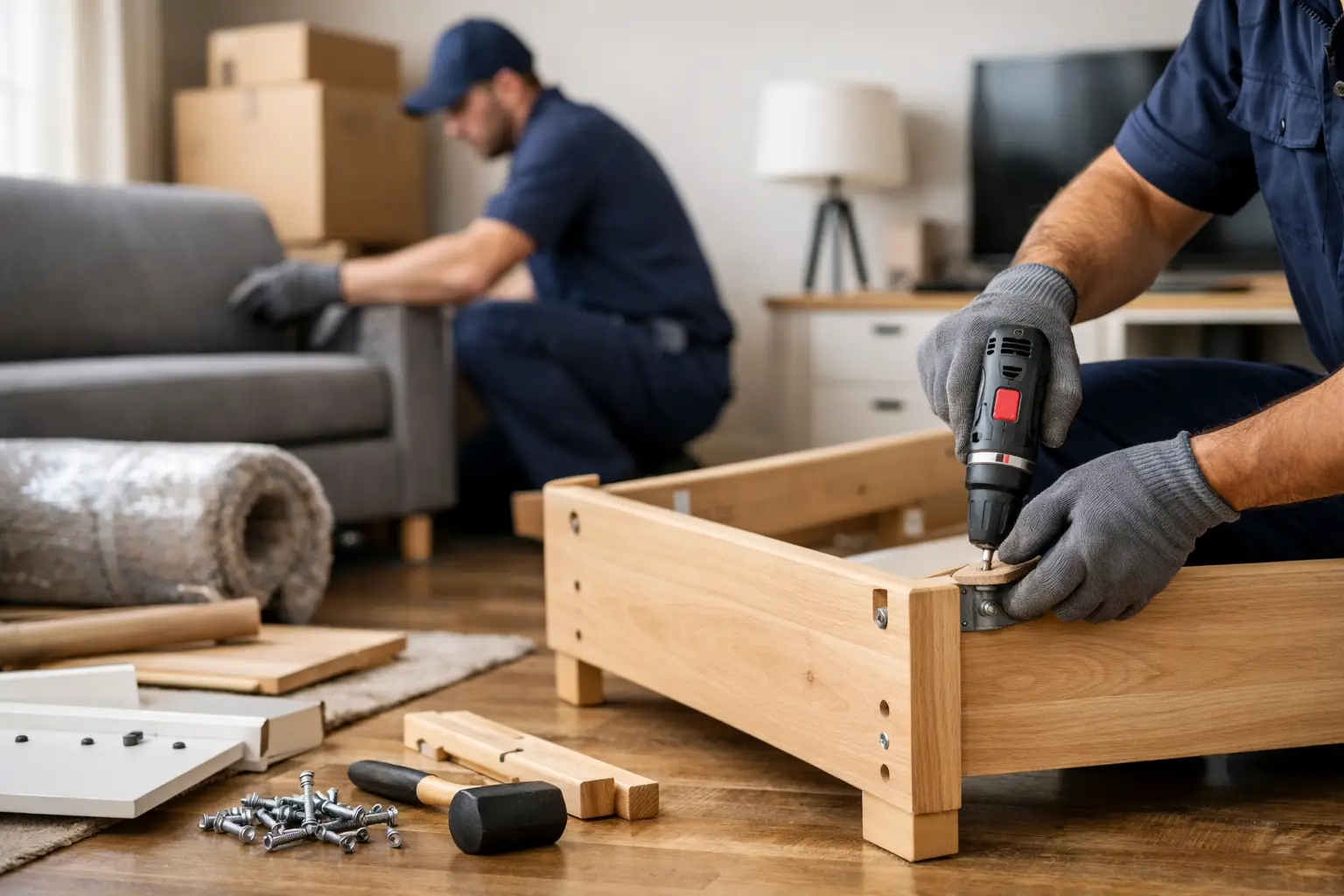
A sectional that will not clear an apartment stairwell, a bed frame with missing instructions, or a large desk that must come apart before an office can reopen can turn a move into a long, frustrating day. A furniture disassembly moving service gives you a practical way to handle those difficult pieces safely, without risking damage to the furniture, your walls, or your back.
For Houston-area moves, this service is especially helpful when elevators, narrow hallways, tight turns, stairs, and multi-story homes are part of the plan. Professional movers can take apart eligible furniture, protect each component for transport, and reassemble it at the destination so you can focus on getting settled.
What a furniture disassembly moving service includes
Furniture disassembly is more than removing a few screws. A trained moving crew evaluates the item, identifies which components need to come apart, and uses the right tools to break it down efficiently. The goal is to create manageable pieces that can be wrapped, carried, loaded, and delivered with less risk.
Common items that may need disassembly include bed frames, headboards, dining tables, large desks, entertainment centers, shelving units, sectionals, and some wardrobes. Crews typically keep hardware organized and protect exposed corners, glass, wood finishes, and upholstered surfaces before loading.
At the new location, the crew reassembles the furniture that was disassembled for the move, provided the item is structurally sound and the necessary parts are available. This matters because a bed frame that arrives in pieces is not much help after a full day of moving. Reassembly support helps make the first night in a new home or the first day in a new office far more manageable.
When furniture disassembly is worth it
Not every piece of furniture should be taken apart. A small coffee table or lightweight bookcase may be safer and faster to move as-is. Disassembly is most valuable when it solves a clear access, safety, or protection problem.
A large item may need to come apart if it will not fit through a doorway, around a stair landing, or inside an elevator. This is common in Houston apartment moves, townhomes, and older homes with tighter interior layouts. Taking apart a bed, desk, or sectional can prevent crews from forcing an item through a space where it could scrape drywall, damage door frames, or strain its joints.
It is also useful for furniture that becomes significantly lighter or more stable once separated. A solid-wood dining table may be easier to protect when the top and legs travel independently. A modular sectional can be carried through a narrow doorway in sections rather than maneuvered as one oversized piece.
For businesses, disassembly can reduce downtime. Office desks, conference tables, cubicle components, and storage systems often need to be broken down before relocation. With an organized plan, crews can label components, protect surfaces, and place items in the correct rooms at the new office for a more efficient setup.
The careful process behind disassembly and reassembly
Reliable movers do not treat every furniture piece the same way. Before moving day, share details about oversized or unusual items when requesting your quote. Photos, dimensions, and information about stairs, elevators, parking, or tight entrances help the moving company send an appropriately sized crew and prepare for the job.
On move day, the crew starts by confirming which pieces require disassembly. They inspect the furniture for existing wear and determine the safest approach. When possible, components are removed in a logical order so reassembly is straightforward at the destination.
Each piece should be protected before it enters the truck. Padded moving blankets, stretch wrap, corner protection, and secure loading methods help reduce movement during transportation. Hardware should stay with its matching furniture whenever possible, rather than being mixed into an unmarked bag or left loose in a drawer.
At delivery, reassembly works best when rooms are prepared in advance. Decide where the bed, desk, dining table, or sectional will go before the crew begins rebuilding it. That avoids assembling a heavy item in the wrong room, then needing to shift it through a doorway afterward.
What customers should do before movers arrive
Professional movers handle the heavy lifting, but a few simple preparations can keep the job moving efficiently. Empty drawers when they contain fragile, loose, or heavy items. Remove personal documents, jewelry, cash, medications, and other valuables from furniture before the crew begins work.
If a desk or entertainment center has cords and electronics, unplug and label them ahead of time. Take photos of complex cable connections if you will need to reconnect monitors, TVs, gaming systems, or office equipment later. For adjustable beds, specialty furniture, or pieces with manufacturer-specific parts, let the moving company know in advance. Some items require particular instructions, and some may be best handled by a specialty technician.
Measure important access points when you are unsure. Doorways, elevators, stairwells, and the route from the truck to the room can affect whether an item must be disassembled. A few measurements taken before moving day can prevent last-minute surprises.
Understand the trade-offs before deciding
Disassembly saves space and improves access, but it can add time to a move. Since moving services are often billed hourly with a stated minimum, the most cost-effective choice depends on the furniture, the layout, and the total complexity of the move.
There is also a practical limit to what should be disassembled. Older particleboard furniture, damaged pieces, and items that have already been assembled and taken apart several times may not hold up well to another breakdown. In those cases, an experienced crew can assess whether moving the item intact, using another route, or replacing it after the move makes more sense.
Some furniture may require an installation specialist rather than a standard moving crew. Wall-mounted systems, built-in units, certain adjustable beds, and highly specialized office furniture can involve electrical connections, mounting hardware, or manufacturer requirements. Being transparent about these items early allows for better planning and avoids promising work that should be completed by another professional.
Choosing the right crew for the job
The right crew size depends on more than the number of rooms in your home. A one-bedroom apartment with stairs, a large sectional, and a heavy bed frame may need more planning than a single-story home with simpler furnishings. Likewise, an office move may require additional movers to safely manage large tables and keep the relocation on schedule.
Look for a licensed, bonded, and insured moving company that explains its pricing, crew options, and policies clearly. You should know whether there is a two-hour minimum, how travel time is handled, and what standard valuation coverage applies before you book. Clear expectations protect your budget and reduce stress when moving day arrives.
Bantu Mover provides trained crews for local residential, commercial, and long-distance relocations, with furniture disassembly and reassembly as part of a broader moving plan. The company can match crew size to the volume of your items, the access conditions, and the level of support you need.
Plan for the room you want to live or work in
The best reason to use professional disassembly is not simply to get furniture onto a truck. It is to arrive with the pieces protected, organized, and ready to serve their purpose again. When you plan ahead, communicate the difficult items, and choose careful movers, your new bedroom can be ready for sleep and your new workspace can be ready for business sooner.